The Cost-Per-Kg Trap
Evaluating space launch solely on cost-per-kg misses the point. This post explains how Rocket Lab thrives by selling premium precision and speed rather than competing on bulk commodity pricing.
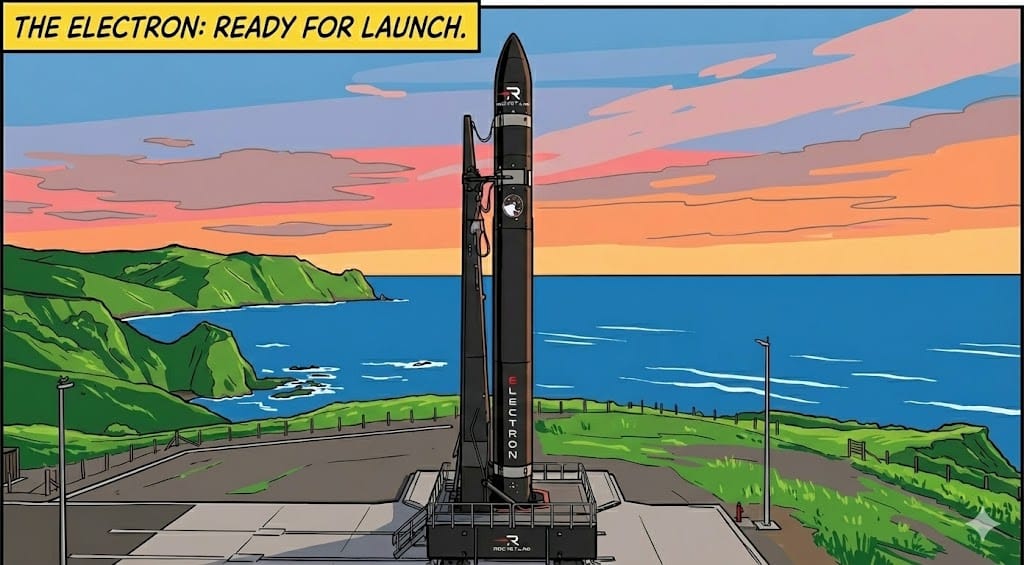
If you evaluate the space industry solely on a spreadsheet, you miss the entire story.
SpaceX’s Transporter missions offer a price point of roughly $5,000 per kilogram. Rocket Lab’s Electron costs significantly more. In a simple commodity market, the cheaper option should win every time. If launch were purely about moving mass from Point A (Earth) to Point B (Orbit), Electron would be niche at best.
Yet, Rocket Lab’s manifest is full and their margins are climbing (hitting record highs in late 2025). This highlights a fundamental misunderstanding of the launch business: Launch is not just a commodity race; it will always demand both premium service and commodity freight—just like every other mature transportation sector.
The Bus vs. The Taxi
The prevailing "cost-per-kg" metric assumes all orbits are equal and all schedules are flexible. They are not.
A massive rideshare mission is a city bus. It is incredibly efficient, but it leaves at a specific time and drops you at a central hub. If your destination is a specific sun-synchronous orbital plane required for a synthetic aperture radar constellation, the bus might drop you miles from your target, forcing you to spend months drifting into phase.
Electron is a taxi. It costs more per mile, but it picks you up when you are ready and drops you exactly at the front door. For a commercial operator, that precision saves months of lost revenue. For the Department of Defense, that precision is a matter of national security.
Speed as a Premium Product
The real value differentiator isn't just where you go, but when you go. The U.S. Space Force’s push for "Responsive Space"—the ability to put an asset in orbit within hours of a crisis—is a capability heavy-lift rideshares simply cannot match.
Rocket Lab recently proved this agility with the STP-S30 "Don't Be Such A Square" mission. When the Space Force needed to deploy their novel DiskSat payloads sooner than planned, Rocket Lab reorganized its manifest to launch the mission five months ahead of schedule. That level of schedule dominance commands a premium that obliterates standard cost-per-kg logic. In this vertical, the metric isn't dollars per ton, but time saved.
"Those larger vehicles could be free and it wouldn't really affect the market for Electron." – Sir Peter Beck
Launch is the Foundation, Not Just the Gateway
Perhaps the most critical nuance is that Rocket Lab has flipped the script on the economics of small launch. It isn’t a loss leader; it is a profitable pillar that supports a much larger architecture: Space Systems.
While Electron generates healthy margins on its own, it also secures the supply chain. By owning the rocket, Rocket Lab controls the schedule. By building the satellites (solar panels, radios, star trackers), they capture the value of the entire mission lifecycle. They aren't just shipping the freight; they are building the truck and the cargo, ensuring they make money at every step of the journey.