The Infinite Pie: Why the New Space Economy Isn't Zero-Sum
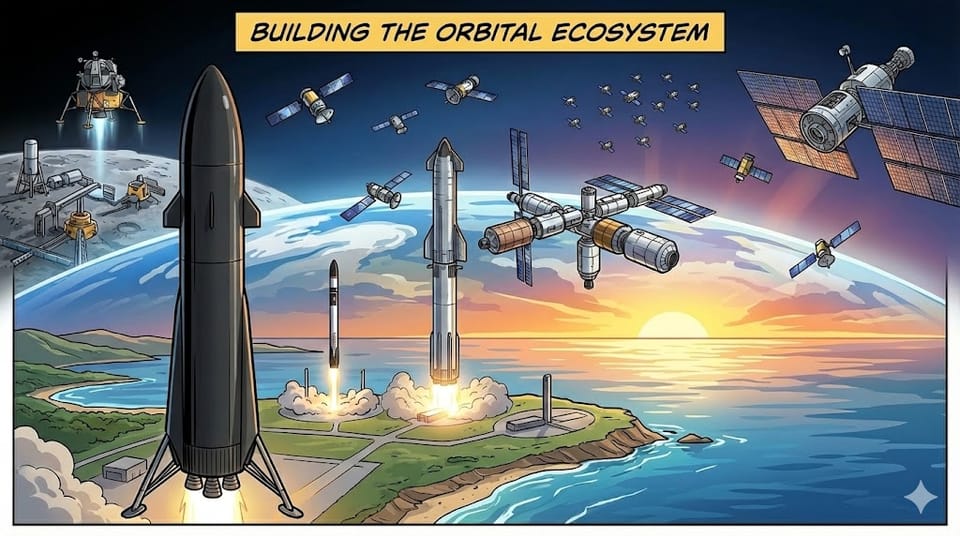
The commercial space industry is not a zero-sum game. A multi-trillion dollar future depends on having multiple successful companies building different layers of infrastructure, rather than a single monopoly fighting for a fixed market share.
There is a persistent media narrative that frames the commercial space industry as a high-stakes horse race—a winner-take-all battle between billionaires where if one company succeeds, the others must fail.
This view is fundamentally flawed because it assumes space is a fixed market. It treats low Earth orbit like a finite piece of real estate that is rapidly filling up.
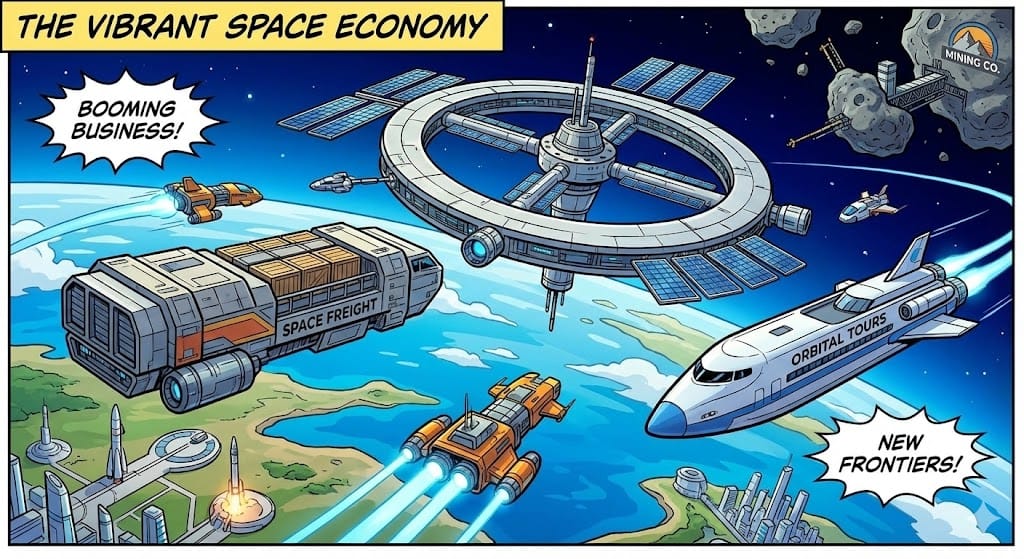
The reality is that the space economy is not a zero-sum game. It is perhaps the ultimate positive-sum ecosystem. We aren't just fighting over slices of existing pie; we are baking an infinitely larger one. A robust, multi-trillion-dollar space economy requires an entire ecosystem of varied players, not just a single monopoly.
The current landscape already proves that different players are finding distinct, necessary niches:
- SpaceX is the heavy-lift freight infrastructure. They have successfully commoditized mass-to-orbit, acting as the container ships of the industry. Their focus on raw tonnage and relentless cost reduction opens the door for massive infrastructure projects, like Starlink, that were previously impossible.
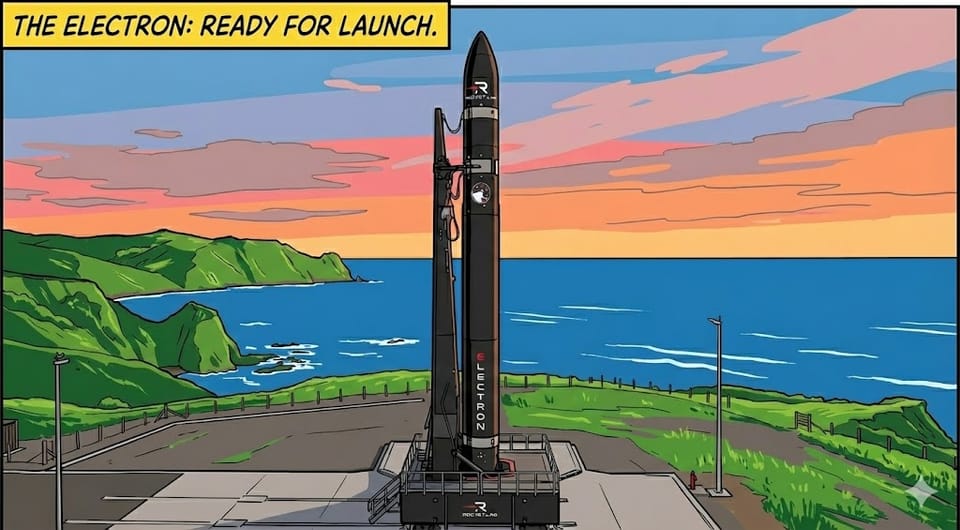
- Rocket Lab has thrived by recognizing that not every payload needs a container ship. While their Electron rocket serves as the precision courier for dedicated small payloads, they are aggressively expanding into medium lift with Neutron. This new vehicle is designed specifically to deploy mega-constellations, bridging the gap between precision launch and mass deployment. Furthermore, they are vertically integrating to become a one-stop shop for building the satellites themselves, not just launching them.
- Blue Origin, while also developing launch capabilities with New Glenn, is heavily focused on the destination and the infrastructure of living in space. Through projects like the Orbital Reef space station and their Blue Moon landers, they are aiming to be the real estate developers and architects of a future where millions of people live and work off-Earth.
A thriving terrestrial economy needs freight trains, FedEx trucks, and construction companies. They don't cancel each other out; they enable one another.
If we want a future with orbital manufacturing, lunar bases, and routine space access, we need redundancy, competition, and specialized capabilities. Reliance on a single provider is a single point of failure for the entire orbital economy. We need multiple winners.