The Real First Step for Space Data Centers: Orbital Edge Compute
Space-based data centers are starting now, but not as massive server farms. The first step is orbital edge computing—using GPUs in space (like StarCloud) to process satellite data instantly in orbit, eliminating the costly downlink bottleneck.
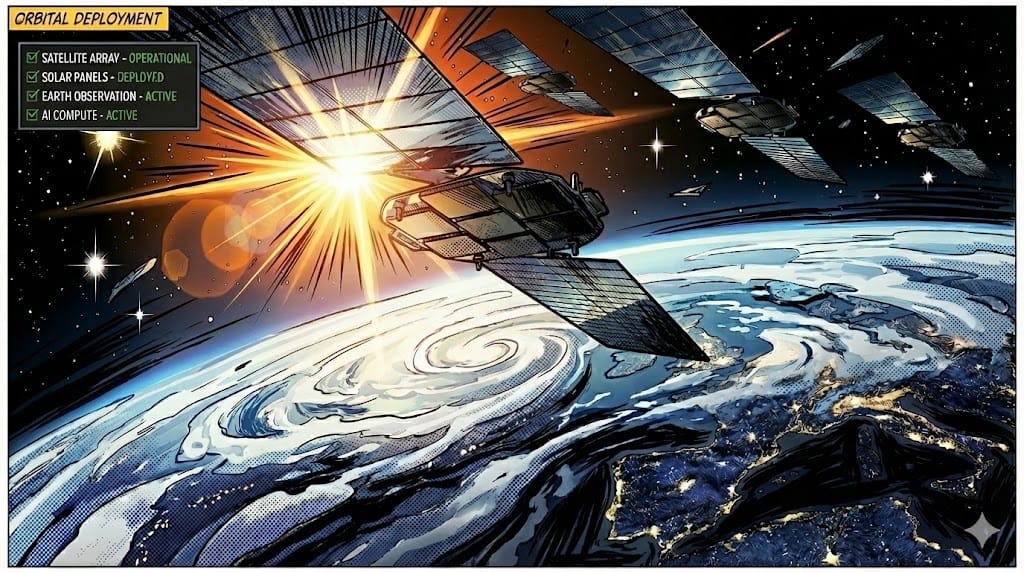
When we talk about "data centers in space," the imagination immediately jumps to massive, sci-fi server farms orbiting Earth—gigawatt-scale facilities beaming processed AI models down to the surface. While that future is technically feasible and economically promising in the long run (thanks to unlimited solar energy and 4 Kelvin radiative cooling), the immediate commercial reality is more grounded, more urgent, and already happening.
The first revolution isn't about moving Earth's compute to space to save power. It’s about moving compute to space to solve the downlink bottleneck.
The Downlink Problem
Modern Earth Observation (EO) satellites—especially those using Synthetic Aperture Radar (SAR) or hyperspectral imaging—generate petabytes of raw data. Getting that data back to Earth remains a critical bottleneck.
While optical (laser) communications are revolutionizing this space by offering massive improvements in bandwidth and security, they are not a silver bullet for the sheer volume of data being produced.
- The Bandwidth Race: Even as optical downlinks move us from gigabits to terabits, sensor resolution and frame rates are scaling up just as fast. We are simply filling larger pipes with more data.
- The "Useless Data" Tax: A significant percentage of downlinked imagery is dead weight—cloud cover, open ocean, or static scenes with no activity. Optical links make it cheaper to send this waste, but they don't make it useful.
Currently, we treat satellites like "flying hard drives" that capture everything and dump it all on the ground. To truly leverage the speed of optical comms, we need to move compute to space—sending down only the insight, not the haystack.
The Solution: Orbital Edge Compute
The immediate business case for space-based AI—championed by companies like StarCloud is edge computing.
Instead of sending raw data down, you process it in situ. You put the GPU right next to the sensor - or at least in orbit with it.
- Filter the Noise: An onboard AI reviews the feed in real-time. If an optical image is 80% clouds, the satellite deletes it instantly. No bandwidth wasted.
- Send the Insight, Not the Raw Data: Instead of downlinking a 50GB SAR file of a port, the satellite runs an object detection model and downlinks a 5KB text file: "Detected: 3 Cargo Ships, 1 Tanker, Location X, Time Y."
- Speed: This reduces the "sensor-to-shooter" (or sensor-to-decision) time from hours to seconds.
Case Study: StarCloud
StarCloud is a prime example of this "crawl, walk, run" strategy. While their long-term vision involves gigawatt-scale orbital clusters, their initial hardware is focused on immediate utility.
- Hardware: They are deploying NVIDIA H100-class compute modules in orbit.
- Proof of Concept: They have already demonstrated training small language models in space, proving that commercial-grade hardware can function in the thermal and radiation environment of LEO.
- The Model: They act as a "GPU cloud in orbit." An EO satellite operator doesn't need to build their own compute payload; they can send their data via inter-satellite link to a StarCloud node, have it processed, and get the results back instantly.
The Positive-Sum Ecosystem
This development doesn't happen in a vacuum. It relies on a thriving ecosystem:
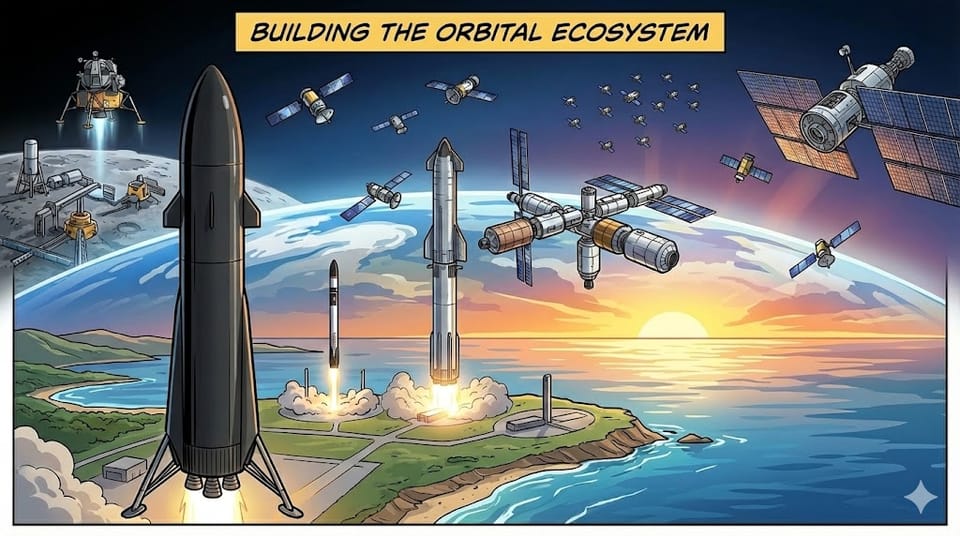
- Heavy Lift: You need the mass-to-orbit capability of SpaceX's Starship to launch the heavy shielding and massive radiators required for high-density compute.
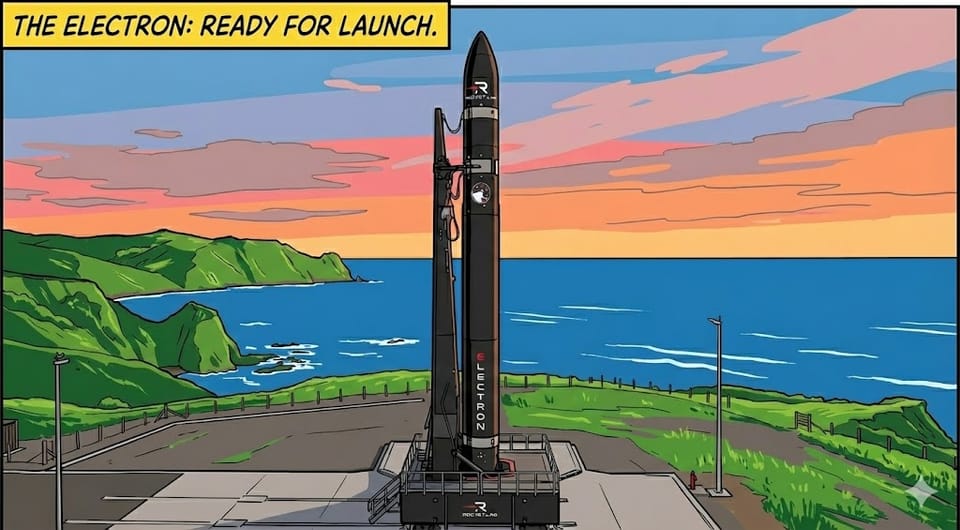
- Precision Launch: You need Rocket Lab's Electron for rapid replenishment or Neutron to place these specific assets into precise orbits to service constellations.
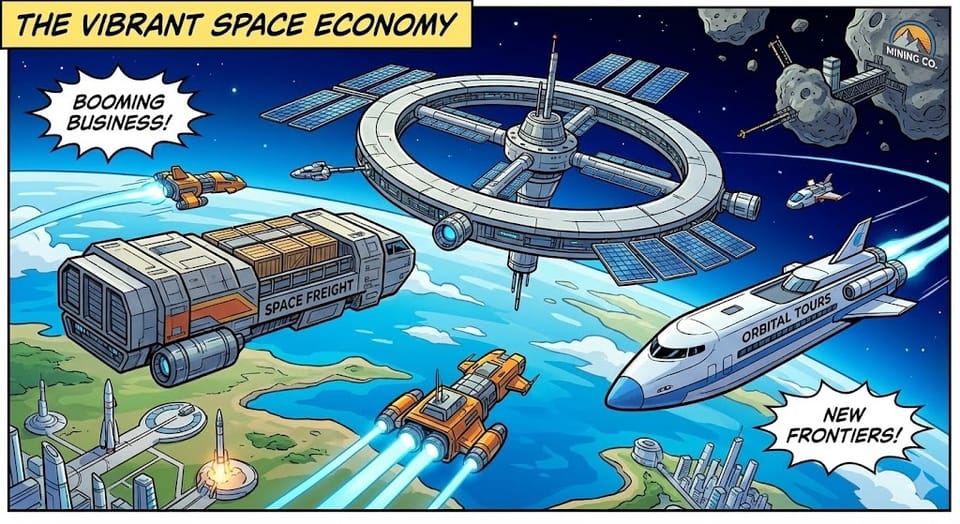
- Services: It creates a new economy of "in-space services," where satellites trade data and compute among themselves without ever touching a ground station.
Orbital compute is not just a backup for Earth; it is the necessary nervous system for the expanding space economy.