The Rising Tide: How a SpaceX IPO Could Uplevel the New Space Sector
A potential SpaceX IPO could do more than enrich current shareholders; it may act as a liquidity event for the entire New Space sector. By unlocking capital for reinvestment and providing a valuation benchmark, a public SpaceX could help validate and fund the broader industry ecosystem.
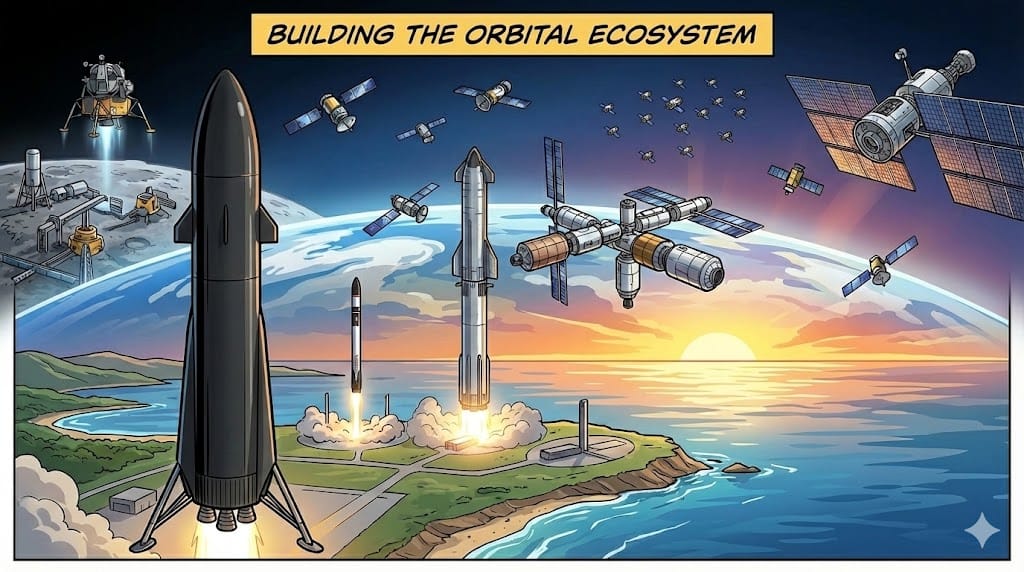
As we move into 2026, the long-anticipated SpaceX initial public offering (IPO) appears increasingly imminent, transitioning from industry rumor to a definitive market expectation. Given SpaceX’s current launch cadence with Falcon 9 and the expansion of its Starlink constellation, such an event could be the largest IPO in history.
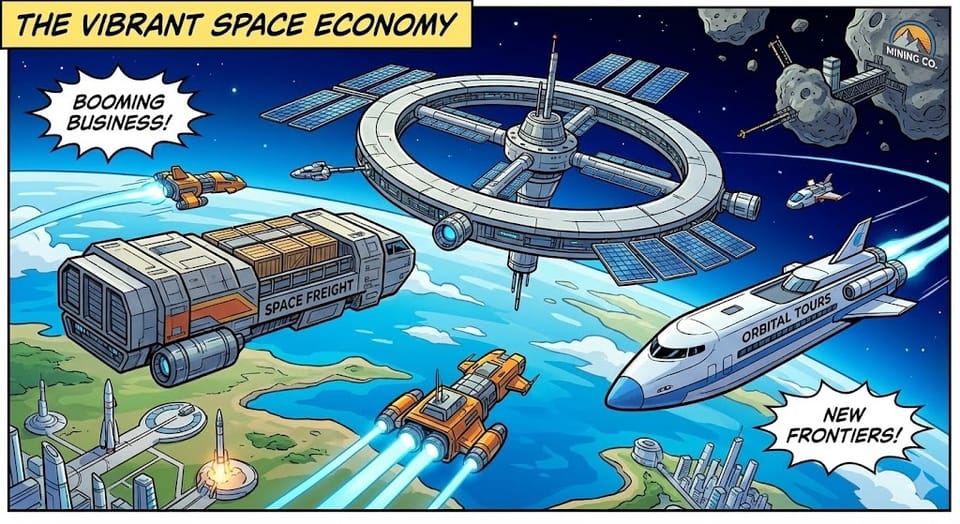
However, viewing a SpaceX IPO solely through the lens of SpaceX’s individual success may be a mistake. In the commercial space industry, this is rarely a zero-sum game. A public listing for the market leader could act as a massive validation event, potentially creating a rising tide that lifts the rest of the New Space ecosystem through several economic mechanisms.
The Liquidity Recycling Loop
One of the most significant impacts of a major tech IPO is liquidity. Currently, billions of dollars in value are locked up in SpaceX equity held by venture capitalists, private equity firms, and early employees.
An IPO unlocks that capital. History in Silicon Valley suggests that this capital may not simply disappear; it often recycles.
- Venture Capital: Investors who realize returns on their early SpaceX bets may look to deploy that capital into new funds. They could be looking for the "next" SpaceX, potentially driving early-stage funding into emerging launch, satellite, and in-space manufacturing startups.
- Employee-Founders: A liquidity event creates a new class of individuals with capital and deep domain expertise. Many vested SpaceX engineers and operators could eventually leave to found their own companies, which may help spread talent and seed capital throughout the industry.
Market Benchmarking and Validation
Valuing private space companies is notoriously difficult. Without a publicly traded market leader, comparable metrics are scarce.
A publicly traded SpaceX could provide a concrete benchmark. The market would be able to assign a real-time value to revenue multiples, launch margins, and subscriber growth costs.
This clarity may benefit existing public players like Rocket Lab (RKLB, AST SpaceMobile, and many others. It could provide institutional investors with a clearer framework for assessing risk and reward across the sector, potentially stabilizing valuations and attracting capital that has previously stayed on the sidelines.
Fueling M&A and Consolidation
A public currency (stock) provides a powerful tool for acquisitions. While some fear this could lead to monopolization, smart M&A is often vital for a maturing industry.
We may see SpaceX acquire companies to vertically integrate further—perhaps securing supply chains for exotic materials or acquiring niche sensor technology for Starship. Furthermore, a flush ecosystem could allow other well-capitalized players to engage in mergers, potentially building more robust competitors to SpaceX and fostering a healthier market structure overall.
Conclusion
A successful SpaceX IPO may not be the end of competition; it could signal the start of a new, more mature phase of the space economy. By potentially unlocking capital, validating business models, and diffusing talent, such an event could provide the resources necessary for the entire ecosystem to scale.